Rating: 4.5/5
Is A-dec 500 Dental Chair Worth The Investment?
Few equipment decisions carry as much weight as choosing the right dental chair. It sits at the centre of every operatory, directly shaping clinician posture, patient comfort,...
Reviewed by Rachel Thompson
Pros
- industry-leading 20-year designed service life backed by a 10-year manufacturer warranty
- ultra-thin backrest and virtual pivot deliver measurably better ergonomic positioning for the clinician
- 500 lb (227 kg) patient weight capacity, the highest in its class, with 4x safety testing
- precision hydraulic system provides quiet, smooth operation that reduces patient anxiety
- modular design allows individual component replacement (upholstery, headrest, delivery) without replacing the entire chair
- strong resale value that effectively reduces the true annual cost of ownership
- global dealer and service network with parts available even for older models
- tool-free ambidextrous conversion accommodates left-handed operators in seconds
- A-dec 500 Pro with A-dec+ software platform bridges the gap on digital integration
Cons
- premium A-dec 500 price places it out of reach for some start-up budgets
- digital workflow integration still trails Planmeca Romexis and KaVo’s native ecosystems
- pricing is not transparent, requiring dealer quotes that can make budget planning more difficult
- upholstery is sensitive to common disinfectants containing alcohol, bleach, or ammonia
- hydraulic seals are a known wear item that will require periodic replacement on high-use chairs
- the A-dec 500 Pro touchscreen upgrade adds a significant cost increase to the base package
Few equipment decisions carry as much weight as choosing the right dental chair. It sits at the centre of every operatory, directly shaping clinician posture, patient comfort, workflow efficiency, and long-term overhead costs. A poorly chosen chair results in premature replacement, chronic musculoskeletal pain, and a patient experience that quietly undermines your practice’s reputation.
The A-dec 500 dental chair has earned its place as one of the most recognised premium patient chairs in modern dentistry. Manufactured by A-dec, a family-owned company headquartered in Newberg, Oregon, with more than five decades of dental equipment innovation, the 500 series pairs precision hydraulic engineering with a deeply considered ergonomic design philosophy.
The premium reputation, however, comes with a premium price tag. Many dentists fitting out a new practice or refurbishing multiple operatories want to know whether the adec 500 price genuinely justifies itself, or whether a more affordable alternative delivers comparable clinical results.
This article provides a thorough, evidence-based review of the A-dec 500 covering core features, real-world clinical performance, pricing breakdown, common problems and their solutions, ergonomic considerations for dentists, and a head-to-head competitor comparison. Whether you are a new graduate planning your first practice or an established clinician upgrading equipment, this guide will help you make an informed purchasing decision.
What Is The A-dec 500 Dental Chair?
Understanding what the A-dec 500 platform includes, and where it sits within A-dec’s product family, provides important context before evaluating its clinical performance.
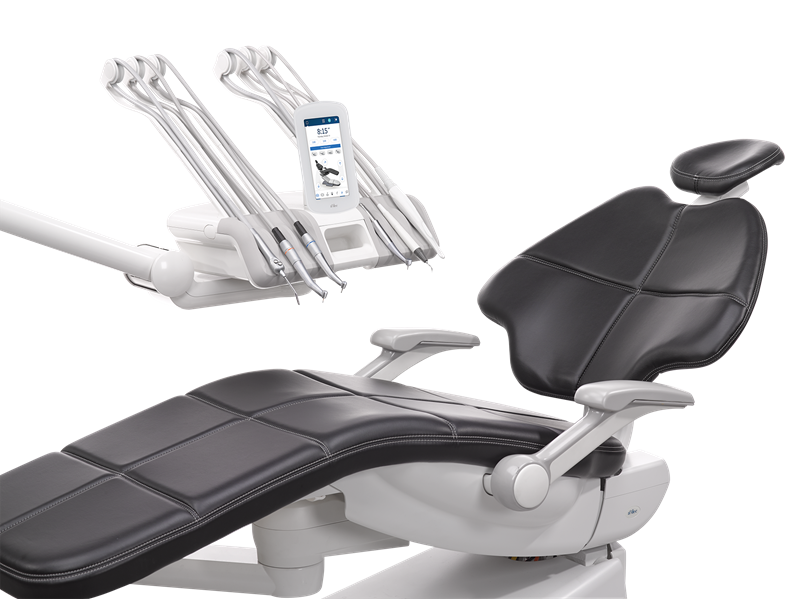
The A-dec 500 (model designation A-dec 511) is a premium dental patient chair built around a robust hydraulic base. It functions as the centrepiece of the A-dec 500 treatment system, which can be configured with various delivery units, the A-dec 500 LED dental light, assistant’s instrumentation, and the newer A-dec 500 Pro delivery system featuring a 7-inch touchscreen powered by A-dec+ updateable software.
Originally introduced in 2004 and significantly updated in 2019 as the A-dec 500B, the chair has been refined over two decades of continuous clinical feedback. Within A-dec’s range, the 500 sits above the A-dec 300 (entry-level) and A-dec 400 (mid-range), offering the thinnest backrest, the most advanced headrest, a hydraulic back-tilt mechanism (compared to electric tilt on lower models), and the widest patient weight capacity in the lineup.
A-dec 500 Key Specifications At A Glance
The table below summarises the core specifications that dental professionals typically evaluate when comparing operatory chairs.
Specification | Details |
Patient weight capacity | 500 lb (227 kg), safety-tested to 4x (2,000 lb) |
Chair height range | 13.5″ (343 mm) to 31.5″ (800 mm) |
Swivel | 60° with brake (30° each side of centre) |
Backrest thickness | Ultra-thin flexible design, under 1″ (25 mm) in key areas |
Headrest | Double-articulating, gliding, lever-style adjustment |
Lift mechanism | Precision hydraulic base lift and hydraulic back tilt |
Toeboard tilt | Raises 9″ during recline for a cradling effect |
Delivery options | Traditional hanging, continental, rear duo, side cabinet |
Upholstery | Formed, sewn, or plush UltraLeather with pressure-mapped contouring |
LED light intensity | Up to 30,000 lux |
Ambidextrous conversion | Yes, tool-free in seconds |
Designed service life | 20 years under normal use |
Warranty | 10 years (new chairs via authorised dealer) |
A-dec 500 Features That Matter In The Operatory
Specifications on paper tell only part of the story. What matters most is how each feature translates into clinical benefit during an eight-hour working day. The following analysis examines each standout feature through the lens of practical, everyday dentistry.
Ultra-Thin Flexible Backrest
The A-dec 500’s backrest measures less than 25 mm thick in certain zones, which is substantially thinner than most competitors. Clinically, this allows the operator to tuck their knees beneath the patient’s back and position closer to the oral cavity without straining forward. During lengthy procedures such as crown preparations or endodontic treatments, even a few centimetres of improved reach can meaningfully reduce shoulder and neck fatigue over the course of a full day.
Virtual Pivot Point
Many dental chairs shift the patient’s head away from the clinician during recline, forcing constant repositioning. The A-dec 500’s virtual pivot synchronises chair movement with the patient’s natural motion. The toeboard rises nine inches during recline, creating a cradling effect while keeping the oral cavity in the operator’s optimal working zone. This eliminates the repeated micro-adjustments that accumulate into lost time and postural strain.
Precision Hydraulic System
Unlike chairs relying on electromechanical systems, the adec 500 dental chair uses a full hydraulic base lift and hydraulic back tilt. The result is exceptionally quiet operation with smooth, controlled stops and starts. A-dec’s product documentation notes that this eliminates anxiety from jarring movements, which is particularly valuable for nervous or paediatric patients. Hydraulic systems are also inherently more durable and require less maintenance than electric motors over a 20-year lifespan.
Double-Articulating Headrest
The lever-style headrest is arguably the A-dec 500’s most underrated feature. It moves with the patient to improve comfort and adjusts easily with one hand, allowing the clinician to optimise head positioning for direct-vision access without interrupting workflow. Proper headrest use is the single biggest factor in achieving ergonomic operator posture, and the 500’s design makes this effortless.
Flexible Delivery System Integration
The A-dec 500 platform supports traditional hanging, continental, rear duo, and side-cabinet configurations. This modularity means the operatory can be tailored to match any preferred working style, whether the clinician practises from behind the patient at 12 o’clock, from the side at 9 o’clock, or alternates between positions throughout the day. The newer A-dec 500 Pro delivery system adds a 7-inch responsive touchscreen with A-dec+ software for complete in-operatory device control.
Infection Control Design
Seamless, pressure-mapped upholstery with no gaps or crevices reduces contamination risk and makes barrier-free cleaning fast and effective. In a clinical environment where infection control protocols demand rigorous surface decontamination between every patient, this design saves the chair-side team valuable turnover time.
Adec 500 Price: How Much Does It Actually Cost?
Pricing is typically the first question any practice owner asks, and A-dec does not publish retail prices publicly. All pricing flows through authorised dealers, and the final adec 500 price depends on the chosen configuration, upholstery selection, delivery system type, lighting package, and regional dealer negotiation.
Based on publicly listed dealer prices and industry benchmarks, the following ranges represent what practices can generally expect to budget in 2026.
Approximate Adec 500 Price Ranges
These estimates draw from publicly available reseller pricing and should be treated as general guidance rather than fixed quotes.
Configuration | Estimated Price (USD) |
Certified refurbished A-dec 511 package (chair, delivery, light, assistant’s arm) | $13,000 – $18,000 |
New A-dec 500 standard operatory package | $18,000 – $25,000 |
New A-dec 500 Pro fully configured (LED light, Pro delivery, UltraLeather) | $25,000 – $35,000+ |
These figures mean the adec 500 price typically runs 20–40% higher than comparable packages from brands such as Belmont, Planmeca, or lower-tier manufacturers. The question is whether that premium earns its keep over the chair’s lifetime.
What Drives The Adec 500 Price Up Or Down
Several configuration choices influence the final cost of an A-dec 500 package.
upholstery selection: standard vinyl is the most affordable option, while plush UltraLeather with heated massage commands the highest premium
delivery system type: traditional hanging costs less than continental, and the A-dec 500 Pro delivery with touchscreen adds a further surcharge
lighting: upgrading from halogen to the A-dec 500 LED light (30,000 lux) increases the package price
add-ons: monitor mounts, cuspidor options, fibre optics, electric handpiece integration, and built-in scalers all contribute to the total
new vs. refurbished: certified refurbished A-dec 500 packages from reputable dealers offer meaningful savings while retaining most of the chair’s longevity advantage
Total Cost Of Ownership And ROI
The true value of the adec 500 dental chair becomes clearest when viewed through total cost of ownership rather than sticker price alone. A-dec states that its chairs are designed and tested for a 20-year service life under normal clinical use, and many practices report their A-dec chairs exceeding that threshold.
Consider a straightforward comparison. A mid-range dental chair purchased for $12,000 that needs replacing after 8–10 years costs roughly $1,200–$1,500 per year. An adec 500 dental chair purchased for $22,000 that lasts 20 years costs approximately $1,100 per year, and the owner still holds a chair with strong resale value at the end of that period. Used A-dec 500 chairs routinely sell for $1,500–$3,000 or more on the secondary equipment market, effectively reducing the annual cost even further.
The adec 500 price can also be managed through dental equipment financing, leasing arrangements, and (in the United States) Section 179 tax deductions that allow practice owners to write off the full purchase price of qualifying equipment in the year of acquisition.
Common A-dec 500 Problems And How To Fix Them
No dental chair is immune to wear, and the A-dec 500 is no exception. The good news is that the most commonly reported problems are predictable, preventable, and repairable without full chair replacement. The following section covers each issue along with its likely cause and a practical solution.
#1: Chair Drifts Or Won’t Hold Position
This is the most frequently cited concern among long-term A-dec 500 owners. The chair gradually sinks or drifts from the set height during a procedure, forcing the clinician to readjust mid-treatment.
Cause: hydraulic seal degradation over time, low hydraulic fluid levels, or foot control calibration drift. This is a normal wear item that typically appears after 8–15 years of heavy daily use.
Solution: check hydraulic fluid levels first, as a simple top-up often resolves the issue. If the problem persists, the hydraulic seals likely need replacement, which is a routine service call for an authorised A-dec technician. Scheduling annual preventive maintenance will catch seal wear before it becomes a clinical disruption.
#2: Upholstery Cracking, Peeling, Or Discolouration
Some practices notice the upholstery developing cracks, peeling areas, or discolouration that makes the chair look worn despite the mechanics functioning perfectly.
Cause: the most common culprit is the use of incompatible disinfectants. Cleaning agents containing high concentrations of alcohol, bleach, or ammonia degrade upholstery materials prematurely. A-dec explicitly recommends using only mild, non-ionic detergent and water, or cleaners free of alcohol, bleach, and ammonia. UV exposure from windows and normal wear after 8–12 years can also contribute.
Solution: switch immediately to A-dec-approved cleaning agents. If upholstery is already damaged, the A-dec 500’s modular design allows individual panel replacement without replacing the chair. Upgrading to the plush UltraLeather option provides enhanced chemical resistance and longer-term durability.
#3: Delivery System Tubing Wear And Air Leaks
Practitioners occasionally report reduced handpiece performance or audible air leaks from the delivery system tubing.
Cause: natural degradation of internal tubing over years of clinical use, kinking from improper routing during installation, or connection fittings that have gradually loosened.
Solution: include tubing inspection as part of the regular maintenance schedule. Worn sections are inexpensive to replace. Ensure that any installation or repositioning follows A-dec’s recommended routing paths to prevent premature kinking.
#4: Foot Control Responsiveness Issues
Some users report the foot control becoming sluggish, unresponsive, or inconsistent over time.
Cause: debris accumulation inside the foot control mechanism, worn toggle switches, or signal board malfunction in newer digital models.
Solution: regular cleaning and inspection of the foot control assembly prevents most debris-related problems. Toggle switches can be replaced individually. For digital foot controls, a firmware update or board replacement by an A-dec technician resolves signal issues.
#5: Headrest Adjustment Difficulty
The headrest becomes stiff, difficult to reposition, or fails to stay locked in the desired position during procedures.
Cause: the locking mechanism can stiffen over time, the pivot point may experience wear, or the glide bar tension may have drifted from its original setting.
Solution: A-dec provides a set screw on the glide bar that adjusts tension with an Allen wrench. As detailed in the A-dec 511 chair overview, a quarter turn is often all that is needed to restore proper hold. For pivot point wear, lubricate per A-dec’s maintenance guide or replace the headrest locking mechanism.
#6: Chair Motor Running Slowly Or Noisily
The chair’s lift or recline movement becomes noticeably slower, louder, or rougher than when it was new.
Cause: an ageing hydraulic pump, low fluid levels, or inconsistent electrical supply to the chair’s power system. In some cases, the power button at the baseplate has been accidentally bumped, which is a surprisingly common occurrence caused by patients’ heels or cleaning crews.
Solution: check the power button at the baseplate first. Then inspect hydraulic fluid levels. If the pump itself has degraded, an A-dec authorised technician can service or replace it. Also verify that the electrical supply to the operatory meets the chair’s power specifications.
Preventive Maintenance Best Practices
The vast majority of A-dec 500 problems are preventable rather than inevitable. A consistent maintenance routine dramatically extends the chair’s usable lifespan and minimises unplanned downtime.
schedule annual professional maintenance with an authorised A-dec service provider
follow A-dec’s daily wipe-down protocol using only approved cleaning agents
maintain a written maintenance log noting any changes in chair behaviour, unusual sounds, or performance inconsistencies
replace wear items such as seals, tubing, and upholstery panels proactively rather than waiting for failure
keep the A-dec dental equipment maintenance checklist accessible for the entire clinical team
How The A-dec 500 Supports Clinician Ergonomics
Ergonomics may not be the most glamorous selling point, but for any dentist who plans to practise for another 10, 20, or 30 years, it may be the most consequential factor in a chair purchasing decision.
Musculoskeletal disorders (MSDs) are the leading occupational health challenge facing the dental profession. A systematic review published in BMC Musculoskeletal Disorders found that 46% of dentists reported low back pain, with more than 25% of those cases classified as chronic. A comprehensive meta-analysis in PLOS ONE reported that MSD prevalence among dental professionals in Western countries ranges from 10.8% to 97.9%, with the neck (58.5%) and lower back (56.4%) being the regions affected most often.
Further research published in Heliyon confirmed that neck pain prevalence reaches 60% among dentists and increases significantly with years of practice. Comparative data from the Annals of Medical and Health Sciences Research found that dentists experience a higher MSD prevalence (61%) than both surgeons (37%) and physicians (20%), with 60% of affected dentists reporting pain in multiple body sites simultaneously.
The adec 500 dental chair addresses these occupational risks through several integrated design decisions. The ultra-thin backrest allows clinicians to sit closer to the patient, reducing forward reach and the spinal loading that accompanies it. The virtual pivot keeps the oral cavity in the optimal working zone throughout recline, eliminating the postural compromises that occur when the patient’s head drifts away from the operator. The expanded height range of 343 mm to 800 mm accommodates clinicians of any stature, and the 800 mm high point supports standing dentistry for practitioners who alternate positions.
The cut-away cast iron baseplate with six contact points allows the operator stool to roll closer to the chair, supporting a neutral hip angle. Programmable preset positions bring the chair to the ideal working height at the press of a button, reducing the cumulative micro-adjustments that contribute to fatigue over a full clinical day.
From a practice management perspective, better ergonomics translates directly into fewer sick days, sustained productivity across longer careers, and reduced risk of early retirement due to chronic pain.
Patient Comfort And Experience In The A-dec 500
Patient comfort may seem secondary to clinical performance, but in a competitive market, the chair experience is one of the first things patients notice and one of the last things they remember. Practices that invest in superior patient comfort tend to enjoy stronger online reviews, higher retention rates, and more word-of-mouth referrals.
The A-dec 500 is engineered around scientific pressure mapping, which distributes the patient’s body weight evenly across the seat surface to eliminate pressure points. During lengthy procedures, patients are less likely to shift, fidget, or request breaks due to discomfort. The precision hydraulic motion ensures smooth, gradual transitions when the chair reclines or returns, eliminating the sudden jolting that triggers anxiety in nervous patients.
The double-articulating headrest supports the head independently of the backrest, improving comfort for patients of varying heights. Multi-position armrests rotate out of the way for easy entry and exit, then return to provide reassuring lateral support during treatment. The 500 lb (227 kg) weight capacity, one of the highest in the industry, ensures that bariatric patients can be accommodated safely and comfortably without requiring a specialised chair.
Optional features like heated massage upholstery (available with the UltraLeather upgrade) create a spa-like experience that differentiates a practice from the moment the patient sits down.
A-dec 500 Vs. The Competition: How Does It Compare?
The adec 500 dental chair does not exist in isolation. A fair evaluation requires comparing it against the premium dental chairs that practitioners most commonly consider. The table below compares the A-dec 500 against four prominent competitors across key clinical decision factors.
Factor | A-dec 500 | KaVo e80 | Planmeca Compact i5 | Belmont Clesta II |
Price tier | Premium | Premium | Premium | Mid-premium |
Lift mechanism | Hydraulic | Electromechanical | Electromechanical | Hydraulic |
Weight capacity | 500 lb / 227 kg | 330 lb / 150 kg | 352 lb / 160 kg | 400 lb / 181 kg |
Backrest | Ultra-thin (<1") | Thin | Narrow-profile | Thin |
Digital integration | A-dec+ touchscreen | KaVo integrated suite | Planmeca Romexis | Basic touchpad |
Designed service life | 20+ years | 15–20 years | 15–20 years | 15–20 years |
Warranty | 10 years | 5 years | 5 years | 5 years |
Parts availability | Excellent (global) | Good | Good | Good |
Resale value | Strong | Moderate | Moderate | Moderate |
The A-dec 500’s core competitive advantages are its hydraulic durability, industry-leading weight capacity, 10-year warranty (double the standard), excellent global parts availability, and strong resale value. Where competitors may hold an edge is in digital workflow integration. Planmeca’s Romexis ecosystem and KaVo’s integrated imaging suite offer tighter out-of-the-box connectivity with CBCT, intraoral scanning, and CAD/CAM systems. Practices that prioritise a digital-first workflow may find those ecosystems more attractive, although A-dec has narrowed this gap significantly with the A-dec+ platform.
The Belmont Clesta II offers a compelling mid-premium alternative with a hydraulic system and slightly lower price point, making it worth evaluating for practices seeking a balance between A-dec-level build quality and a more modest budget.
Is The A-dec 500 Right For Your Practice?
Not every practice needs a premium dental chair, and not every budget can accommodate one. The following assessment outlines who will benefit most from the adec 500 dental chair, and who may be better served exploring alternatives.
The A-dec 500 is ideal for:
established practices prioritising long-term value and total cost of ownership over initial savings
clinicians experiencing or at risk of musculoskeletal disorders who need superior ergonomic support
multi-operatory practices that want consistency, reliability, and a unified parts inventory across all treatment rooms
practices treating a high volume of bariatric, elderly, or anxious patients who benefit from maximum comfort and weight capacity
practitioners who value US manufacturing, a 10-year warranty, and global parts availability
The A-dec 500 may not be ideal for:
start-up practices operating on a very tight initial budget where a capable mid-range chair meets immediate clinical needs
practices planning to sell or relocate within 2–3 years, where the long-term ROI advantage cannot be fully captured
dental offices that require deeply integrated digital imaging and CAD/CAM workflows built directly into the chair platform
practices in regions where A-dec dealer support and parts availability are limited
Warranty, Service Network, And Resale Value
A-dec backs the 500 series with a 10-year warranty on all new chairs purchased through authorised dealers. This is double the 5-year warranty offered by most competitors, reflecting the manufacturer’s confidence in the chair’s build quality and hydraulic system reliability.
A-dec’s global dealer and service network is one of the most extensive in the dental equipment industry. Replacement parts are available even for A-dec chairs that are decades old, which is a significant advantage over brands where parts availability declines sharply once a model line is discontinued. This parts longevity directly supports the 20-year service life that A-dec designs its chairs around.
On the resale market, A-dec 500 chairs consistently command higher prices than competing used chairs of similar age. Practices that maintain their equipment well can expect to recover a meaningful portion of their original investment, which effectively reduces the true annual cost of ownership.
Bottom Line
The adec 500 dental chair is a premium investment that delivers exceptional build quality, ergonomic design, patient comfort, and long-term durability. The adec 500 price is undeniably higher than most alternatives, but when evaluated through total cost of ownership, clinician health outcomes, patient experience, and resale value, it represents strong value for the right practice.
This is a chair built for dentists who think in decades rather than budget cycles. For established practices, ergonomically-conscious clinicians, and multi-operatory offices seeking reliability across every treatment room, the A-dec 500 earns its premium. For start-ups with constrained budgets or practices prioritising deeply integrated digital ecosystems, alternatives like the Belmont Clesta II or Planmeca Compact i5 deserve consideration.
The recommendation for any practice owner considering the A-dec 500 is to contact a local authorised A-dec dealer, request a personalised quote for the specific configuration needed, and schedule an in-office demonstration. No specification sheet replaces the experience of sitting in the chair, adjusting the headrest, and feeling the hydraulic motion firsthand.
Verdict
<p>After evaluating the A-dec 500 across every dimension that matters in daily clinical practice, the verdict is clear: this chair earns its reputation as a best-in-class operatory investment. The hydraulic system is remarkably reliable, the ergonomic design meaningfully reduces occupational strain, the patient experience is noticeably superior, and the 20-year service life makes the per-year cost competitive with chairs that cost far less upfront.</p><p>The adec 500 dental chair is not the right choice for every situation. Practices with extremely tight start-up budgets or those seeking native digital imaging integration may find better-suited options elsewhere. However, for the majority of established dental practices seeking a chair that will perform day in and day out for two decades, the A-dec 500 remains the benchmark against which all competitors are measured.</p>
Frequently Asked Questions
How much does the adec 500 dental chair cost?
The adec 500 price varies significantly depending on the configuration and dealer. Refurbished packages typically start around $13,000–$18,000, standard new packages range from $18,000–$25,000, and fully configured A-dec 500 Pro setups with LED lighting and UltraLeather upholstery can exceed $35,000. Contact an authorised A-dec dealer for a quote tailored to your specific needs.
How long does an A-dec 500 dental chair last?
A-dec designs and tests its chairs for a 20-year service life under normal clinical use. Many practices report their A-dec 500 chairs lasting well beyond that with proper maintenance and timely replacement of wear items such as hydraulic seals and upholstery panels.
What are the most common A-dec 500 problems?
The most frequently reported issues include hydraulic drift (chair sinking during use), upholstery degradation from harsh disinfectants, foot control responsiveness decline, and headrest tension changes. All of these are addressable through routine maintenance and are largely preventable.
Is the A-dec 500 better than the A-dec 300?
The A-dec 500 offers a thinner backrest, the virtual pivot feature, a hydraulic back tilt (vs. electric on the 300), a more advanced lever-style headrest, wider backrest, and higher weight capacity. The A-dec 300 is a solid entry-level option for budget-conscious practices that still want A-dec build quality.
Can the A-dec 500 accommodate bariatric patients?
Yes. The A-dec 500 has a patient weight capacity of 500 lb (227 kg), which is one of the highest ratings in the dental chair market. The chair is safety-tested to four times that capacity (2,000 lb / 907 kg).
What disinfectants are safe to use on the A-dec 500?
A-dec recommends cleaning upholstery with mild, non-ionic detergent and water, or commercially available cleaners that contain no alcohol, bleach, or ammonia. Using non-approved disinfectants is the leading cause of premature upholstery damage.
What warranty does the A-dec 500 come with?
New A-dec 500 chairs purchased through authorised dealers come with a 10-year warranty, which is double the industry standard of 5 years.