Rating: 4.4/5
A Complete CS 9600 CBCT Scanner Review
Choosing a CBCT scanner is one of the most consequential equipment decisions any dental practice will make. The investment is substantial, the learning curve is real, and the...
Reviewed by Mantas Petraitis
Pros
- Up to 14 fields of view covering every clinical application from endodontics to maxillofacial surgery
- Modular, upgradeable platform (3-in-1 to 5-in-1) that grows with the practice
- AI-driven positioning and SmartAuto technology reduce retakes and operator dependency
- CS MAR technology and optional 120 kV tube deliver superior artefact management
- Only CBCT scanner with an integrated retractable seat for improved patient comfort
- Low-dose mode achieves up to 86% less radiation than standard 2D panoramic scans
- Comprehensive software suite with implant planning, orthodontic, airway, and restorative modules
- Single-touch repeatability for consistent follow-up imaging
Cons
- Premium price point places it at the higher end of the CBCT market
- Learning curve for advanced software features, particularly for teams new to 3D imaging
- Cephalometric module and 120 kV upgrade are optional add-ons at additional cost
- Unit footprint requires a dedicated space (minimum 1,500 x 2,000 mm without ceph)
- Software compatibility with Windows updates can occasionally cause disruptions
Choosing a CBCT scanner is one of the most consequential equipment decisions any dental practice will make. The investment is substantial, the learning curve is real, and the clinical impact touches every specialty from implant planning to endodontic diagnostics. Among the top-tier options available today, the CS 9600 from Carestream Dental has earned a reputation as one of the most versatile and intelligent cone beam computed tomography systems on the market.
This review takes an honest, clinical look at the Carestream 9600, covering everything a practising dentist or practice owner needs to know before committing to a purchase. That includes an in-depth breakdown of its features, real-world clinical applications, common problems users encounter (and how to fix them), a transparent discussion of the CS 9600 price, and a side-by-side comparison with its closest competitors. Whether upgrading from 2D panoramic imaging or replacing an ageing CBCT unit, this guide provides the detail needed to make a confident, well-informed decision.
What Is the CS 9600? A Quick Overview of the Carestream Scanner
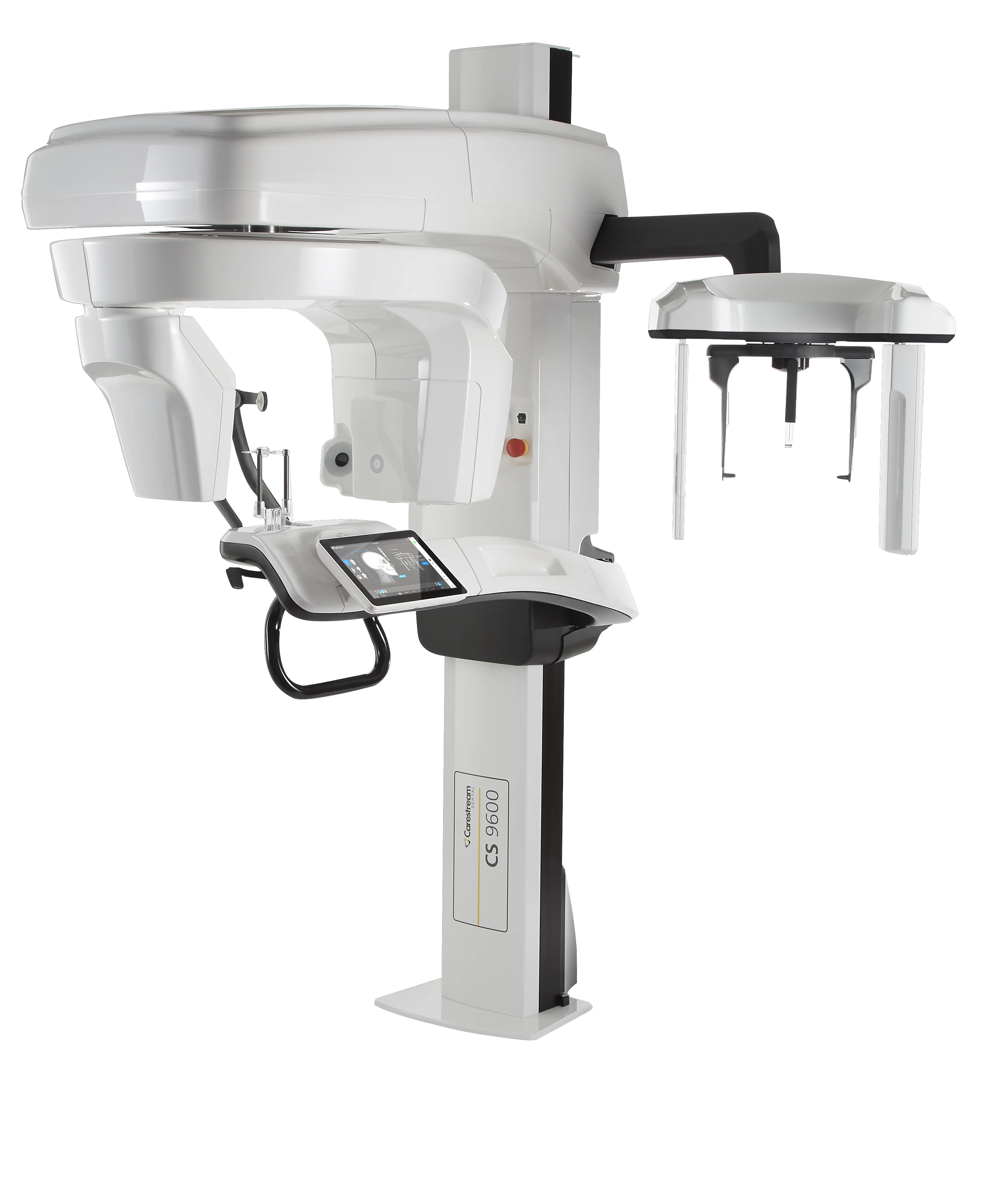
The CS 9600 is a multi-function extraoral imaging system manufactured by Carestream Dental, a global leader in dental imaging technology with decades of experience developing both film-based and digital systems. The unit is designed to consolidate several imaging workflows into a single, upgradeable platform.
At its core, this Carestream scanner combines 2D panoramic imaging with full CBCT (cone beam computed tomography) capabilities. Depending on the configuration, it can function as a 3-in-1 or even a 5-in-1 system, adding optional cephalometric imaging, 3D facial scanning, and 3D model scanning. This modular architecture means practices can start with the features they need today and expand the unit as their clinical scope grows, without replacing the hardware entirely.
The Carestream 9600 won the Cellerant Best of Class Technology Award in both 2023 and 2024, recognition that reflects its strong reception among dental professionals across general dentistry, oral surgery, orthodontics, and ENT.
Key Features and Technical Specifications of the CS 9600
Understanding the technical capabilities of any CBCT scanner is essential before investing. The CS 9600 distinguishes itself through a combination of imaging versatility, AI-driven automation, and dose-reduction technology that addresses common concerns among both clinicians and patients.
Imaging Modes: CBCT, Panoramic, and Cephalometric
The Carestream 9600 supports multiple imaging modalities within a single unit. CBCT imaging produces highly detailed 3D volumes of teeth, soft tissue, nerve canals, and bone. The 2D panoramic mode uses Carestream's proprietary Tomosharp algorithm, paired with AI-based positioning, to deliver sharp panoramic images quickly and reliably. For orthodontic and orthognathic applications, the optional Scan Ceph module captures cephalometric images in as little as three seconds, with fully automated tracings available within ten seconds.
Field of View Options and Image Resolution
One of the most notable strengths of this CBCT scanner is its field of view (FOV) flexibility. The CS 9600 offers up to 14 FOV options, ranging from a focused 4 x 4 cm for single-tooth endodontic assessment up to a full 16 x 17 cm for maxillofacial surgery and orthognathic planning. Resolution reaches as high as 75 microns (0.075 mm voxel size), which is well-suited for detecting fine anatomical details such as hairline root fractures, accessory canals, and periapical pathology.
The unit operates with a tube voltage range of 60 to 90 kV as standard, with an optional upgrade to 120 kV. The higher kilovoltage, combined with intelligent filtration, reduces beam hardening artefacts and improves contrast in both bone and soft tissue without increasing the radiation dose to the patient.
Software Integration and AI-Assisted Workflow
The CS 9600 runs on Carestream's CS Imaging software suite, which includes optional modules for implant planning, orthodontic analysis, restorative design, and airway assessment. The implant planning module features a comprehensive library of implant systems and supports virtual crown placement for prosthetically driven treatment planning.
The AI integration is particularly noteworthy. A Live Positioning Assistant uses built-in cameras and facial recognition algorithms to guide patient positioning in real time, displaying live views on the unit's touchscreen. SmartAuto Technology analyses the patient's morphology and automatically calculates optimal exposure parameters and beam trajectory. The system also records each patient's positioning data, enabling single-touch repeatability for follow-up scans. This combination of features significantly reduces the risk of retakes, even when less experienced staff members operate the unit.
Dose Management and Patient Safety
Radiation dose is a legitimate concern for patients and a regulatory consideration for every practice. The CS 9600 includes a dedicated low-dose mode for both 2D and 3D imaging. According to a study conducted at the University of North Carolina School of Dentistry, the unit's low-dose CBCT protocol can deliver 3D images at up to 86% lower dose than standard 2D panoramic images. The system also features the CS MAR (Metal Artefact Reduction) tool, which reduces scatter from metal restorations and implants, helping clinicians obtain cleaner diagnostic images without needing to increase exposure.
Patient Comfort and Ergonomic Design
The Carestream 9600 is the only CBCT scanner currently available with an integrated retractable seat. This allows patients to be scanned in either a seated or standing position, accommodating wheelchair users, elderly patients, and children. The seated position also reduces patient movement during scanning, which directly improves image quality and reduces the need for retakes.
CS 9600 Specifications at a Glance
Specification | CS 9600 Detail |
Imaging modalities | CBCT, 2D panoramic, cephalometric (optional), 3D face scan (optional), 3D model scan |
Field of view (FOV) | 4x4 cm to 16x17 cm (up to 14 options) |
Voxel size (resolution) | 75 µm to 300 µm |
Tube voltage | 60–90 kV standard, 60–120 kV (optional) |
Tube current | 2–15 mA |
Tube focal spot | 0.3 mm or 0.7 mm |
Greyscale depth | 14-bit (16,384 levels) |
Sensor technology | CMOS |
Ceph scan time | As low as 3 seconds (18 x 24 cm, Fast Scan mode) |
Low-dose capability | Up to 86% lower dose than 2D pano (3D low-dose mode) |
Unit weight | 210 kg (without ceph), 240 kg (with ceph) |
Power supply | 100–240 V, 50/60 Hz |
Min. room size (without ceph) | 1,500 x 2,000 x 2,200 mm |
Source: Carestream Dental official product specifications
Clinical Applications: How Dentists Use the Carestream 9600
The true value of any CBCT scanner lies in what it enables clinicians to accomplish. The CS 9600's combination of wide FOV selection, high resolution, and advanced software tools makes it applicable across virtually every dental discipline. Below are the most common clinical use cases where this Carestream scanner delivers measurable diagnostic advantages.
Implant Planning and Guided Surgery
For implant dentistry, the CS 9600 provides detailed 3D visualisation of available bone volume, bone density, proximity to vital structures (such as the inferior alveolar nerve and maxillary sinus floor), and ideal implant angulation. The integrated implant planning software allows clinicians to virtually place implants from a library of major implant systems and design custom surgical guides. When paired with the optional Face Scan feature, practitioners can superimpose CBCT data with a 3D facial image and intraoral scan to achieve truly prosthetically driven implant placement.
Endodontic Diagnostics
Endodontists benefit significantly from the unit's high-resolution small-FOV modes. At 75 µm voxel resolution, the CS 9600 reveals missed canals, vertical root fractures, periapical lesions, and internal resorption that are frequently invisible on 2D radiographs. The CS MAR feature is especially useful for endodontic cases involving heavily restored teeth, as it reduces scatter from existing crowns and posts that would otherwise obscure the root anatomy.
Orthodontic Treatment Planning
The Scan Ceph module transforms the CS 9600 into a complete orthodontic imaging station. Clinicians can capture cephalometric images in seconds, with automated landmark tracing completed almost instantly. Combined with the full-skull CBCT FOV (16 x 17 cm), the unit supports comprehensive 3D orthodontic analysis, including assessment of impacted teeth, airway dimensions, and skeletal relationships.
TMJ and Airway Analysis
The CS 9600 offers dedicated TMJ and airway imaging programs. These allow precise visualisation of condylar morphology, joint space, and articular disc position for TMJ disorder assessment. Airway analysis tools within the CS Imaging software enable volumetric measurements of the pharyngeal airway, supporting screening and treatment planning for obstructive sleep apnoea and related conditions.
Common Problems With the CS 9600 and How to Solve Them
No imaging system is without its challenges, and the CS 9600 is no exception. While the unit receives consistently positive clinical feedback, several recurring issues are reported by practices using the system. Understanding these problems, their root causes, and how to address them can save significant time, reduce frustration, and minimise downtime.
Image Artefacts and Noise
Metal artefacts remain one of the most frequently encountered issues in CBCT imaging, not just with the CS 9600 but across all CBCT scanners. Patients with multiple metal restorations, implants, or orthodontic hardware can produce streak artefacts and scatter that degrade image quality around the areas of interest.
To solve it, always activate the CS MAR (Metal Artefact Reduction) feature when scanning patients with significant metalwork. If the standard 90 kV configuration is in use, consider upgrading to the 120 kV tube, which substantially reduces beam hardening artefacts. Additionally, selecting a smaller FOV that focuses tightly on the area of interest reduces the volume of metal within the scan field, which in turn reduces scatter. For persistent artefact issues, ensure the system's flat-panel sensor is properly calibrated according to the manufacturer's schedule.
Software Crashes and Compatibility Errors
Some users report that CS Imaging software can freeze or crash, particularly after Windows operating system updates or when running on workstations that do not meet the recommended hardware specifications. Large-volume CBCT reconstructions can also strain underpowered systems.
To solve it, ensure the dedicated CS 9600 workstation meets or exceeds Carestream's minimum hardware requirements, including sufficient RAM, a compatible GPU, and adequate storage. Before applying any Windows updates, check Carestream's support portal for compatibility notices. It is advisable to delay major OS updates (such as Windows feature releases) until Carestream has verified compatibility. If crashes persist, contact Carestream technical support to check for available software patches or driver updates. Running CS Imaging on a dedicated machine rather than a shared office workstation also reduces conflicts.
Sensor Calibration Drift
Over time, CBCT sensors can experience subtle calibration drift that leads to inconsistent exposure levels, slight variations in image contrast, or gradual degradation of image quality. This is a normal characteristic of flat-panel CMOS sensors and is not unique to the CS 9600, though it can be alarming for clinicians who notice progressive changes in their scan output.
To solve it, follow Carestream's recommended calibration schedule precisely. The CS 9600 includes built-in calibration routines that can be run by trained staff. If image quality appears to be declining between scheduled calibrations, perform an ad-hoc calibration and document the results. If calibration does not resolve the issue, the sensor may require professional servicing. Carestream's CS UpStream remote monitoring system can flag performance anomalies proactively, so ensure this feature is enabled and that the unit has an active network connection.
Patient Positioning Errors
Despite the CS 9600's advanced positioning aids, patient movement and incorrect positioning still account for a meaningful percentage of retakes, especially in practices where multiple staff members operate the unit with varying levels of experience.
To solve it, make full use of the Live Positioning Assistant and the built-in cameras to verify patient alignment before initiating the scan. Use the integrated retractable seat for patients who have difficulty standing still, as the seated position significantly reduces movement. Ensure all operators receive thorough training on the positioning workflow, including correct use of the chin rest, head stabiliser, and Frankfort plane alignment. The SmartAuto Technology should be enabled at all times, as it automatically adjusts exposure settings based on patient morphology, reducing the chance of needing a rescan due to incorrect parameters.
DICOM Export and Network Connectivity Issues
Practices integrating the CS 9600 with third-party practice management software or referral networks sometimes encounter difficulties with DICOM export, network configuration, or data transfer between the CS 9600 workstation and other systems on the office network.
To solve it, verify that the CS 9600 workstation's network settings are correctly configured for your practice's infrastructure, including proper IP addressing and firewall exceptions. Confirm that the receiving software supports the specific DICOM standard version used by the CS 9600. If DICOM export fails intermittently, check for network congestion or unstable Wi-Fi connections and consider using a wired Ethernet connection for the workstation. For persistent integration issues, work with both your IT provider and Carestream's technical support team to conduct a network diagnostic. Keeping CS Imaging software and all DICOM-related drivers up to date is also essential.
CS 9600 Price: What Does the Carestream 9600 Scanner Cost?
The Carestream 9600 scanner price is one of the most frequently searched topics among dentists evaluating this system, and for good reason. A CBCT scanner represents a significant capital investment, and understanding the full financial picture is critical before committing.
New Unit Pricing
At the time of writing, the CS 9600 price for a new unit typically falls in the range of $80,000 to $130,000+ depending on the configuration chosen. A base configuration with 2D panoramic and CBCT capabilities sits at the lower end of this range, while a fully loaded unit with the Scan Ceph module, 120 kV upgrade, Face Scan option, and the largest FOV package commands a premium. Pricing varies by region, authorised dealer, and any promotional offers or trade-in credits that may be available. It is always advisable to request quotes from multiple authorised Carestream dealers to ensure a competitive price.
Pre-Owned and Refurbished Options
For practices seeking a lower entry point, the pre-owned market offers certified refurbished CS 9600 units at a meaningful discount. Pre-owned CBCT scanners from reputable dealers typically sell for 30% to 50% below the new list price. When purchasing a refurbished Carestream 9600, verify that the unit includes a valid warranty, confirm the sensor's condition and calibration status, and ensure that software licensing transfers with the sale.
Total Cost of Ownership
The CS 9600 price extends well beyond the initial purchase. Practices should budget for installation (which may involve electrical upgrades and IT infrastructure), annual maintenance contracts through Carestream's CS Advantage programme, software licensing and updates, sensor replacement over the unit's lifespan, and periodic calibration service calls. Annual service contracts typically range from $5,000 to $12,000 depending on coverage level. Factoring in all of these costs, the total cost of ownership over a typical 7 to 10 year lifespan provides a more accurate picture of the investment than the sticker price alone.
CS 9600 vs. Competitors: How the Carestream Scanner Stacks Up
Evaluating the CS 9600 in isolation is not enough. Dental professionals should weigh it against its closest competitors to understand where it excels and where alternatives may hold an advantage. Below is a comparison against three widely considered alternatives in the premium CBCT scanner segment.
CS 9600 vs. Planmeca Viso G5
The Planmeca Viso G5 is a direct competitor offering freely adjustable volume sizes from 3 x 3 cm to 20 x 17 cm, compared to the CS 9600's 14 preset FOV options up to 16 x 17 cm. Planmeca's patented Ultra Low Dose protocol and CALM motion correction algorithm are standout features, and the Romexis software platform is highly regarded for its breadth of tools. The CS 9600 counters with its integrated retractable seat (unique in the market), CS MAR metal artefact reduction, and SmartAuto positioning technology. Both units deliver excellent image quality. The Planmeca Viso G5 may appeal to practices that prioritise unlimited FOV flexibility, while the CS 9600 is often preferred for its ease of use, automated workflows, and patient comfort features.
CS 9600 vs. Vatech Green CT2
Vatech's Green CT2 offers competitive image quality and an attractive price point, often coming in below the Carestream 9600 scanner price. Vatech units are known for straightforward operation and reliable build quality, backed by a strong five-year warranty. The CS 9600 differentiates itself with its broader range of FOV options (14 versus the Green CT2's more limited selection), the 120 kV tube upgrade for improved artefact reduction, and a more comprehensive software ecosystem. Practices with a tighter budget that do not require the full spectrum of CS 9600 features may find the Vatech Green CT2 to be a solid, cost-effective alternative.
CS 9600 vs. Dentsply Sirona Orthophos SL 3D
The Dentsply Sirona Orthophos SL 3D is a well-established system with proven reliability and strong integration with Sidexis 4 and Sicat software. Its maximum FOV of 11 x 10 cm is considerably smaller than the CS 9600's 16 x 17 cm, which limits its suitability for full-arch implant cases and maxillofacial surgery. The Orthophos SL 3D is a practical choice for general practices with moderate 3D imaging needs, but practices requiring large-volume scans, multi-specialty diagnostics, or cephalometric imaging will find the CS 9600 to be the more capable system.
Who Should Buy the CS 9600? Ideal Practice Profiles
The CS 9600 is a premium, full-featured CBCT scanner that delivers the greatest return on investment for practices with specific clinical and operational profiles. The following types of practices are best positioned to benefit from this system.
Mid-to-large general practices with an implant focus. Practices placing implants regularly need precise 3D bone assessment, nerve mapping, and guided surgery planning. The CS 9600's FOV range and implant planning software align directly with this workflow.
Multi-specialty and group practices. When a single unit needs to serve general dentists, orthodontists, endodontists, and oral surgeons under one roof, the CS 9600's 5-in-1 capability and diverse FOV options make it a logical choice.
Oral surgery and maxillofacial centres. The full 16 x 17 cm FOV, 120 kV imaging, and ENT-specific protocols make the CS 9600 suitable for complex surgical planning, orthognathic cases, and TMJ assessment.
Who might look elsewhere: small general practices with low scan volume and limited specialty referrals may find the Carestream 9600 scanner price difficult to justify. In these cases, a more compact, lower-cost CBCT unit with fewer FOV options could offer a better cost-to-value ratio.
Bottom Line
The Carestream CS 9600 is a top-tier CBCT scanner that delivers on its promise of combining intelligent automation with clinical versatility. For dental practices that need a single imaging platform capable of handling everything from focused endodontic scans at 75 µm resolution to full maxillofacial volumes at 16 x 17 cm, this unit checks nearly every box. The AI-driven positioning, CS MAR artefact reduction, and integrated retractable seat are genuine differentiators that translate into fewer retakes, cleaner images, and a better patient experience.
The CS 9600 price puts it in the premium bracket, and reaching its full 5-in-1 capability requires investing in optional modules. Practices should also plan for a meaningful staff training period and ongoing annual maintenance costs. These are valid considerations, not dealbreakers.
For mid-to-large practices, multi-specialty clinics, implant-focused offices, and oral surgery centres, the Carestream 9600 represents a sound long-term investment that can grow alongside the practice. For smaller, lower-volume offices, a more compact and affordable CBCT scanner may be more appropriate. Overall, the CS 9600 earns a strong recommendation as one of the most capable and well-rounded CBCT systems currently available.
Verdict
<p>The CS 9600 is a genuinely impressive piece of dental imaging technology. Its combination of imaging versatility (14 FOV options, 75 µm resolution, multi-modal capability), intelligent automation (AI positioning, SmartAuto, single-touch repeatability), and thoughtful patient-centred design (integrated seat, low-dose protocols) places it firmly in the top tier of currently available CBCT scanners.</p><p>Where this Carestream scanner truly separates itself from the competition is in workflow efficiency. The AI-driven positioning tools and automated exposure settings mean that even less experienced team members can consistently produce diagnostic-quality images, which has a direct impact on practice productivity and patient throughput. The CS MAR feature and 120 kV upgrade address one of the most persistent headaches in CBCT imaging, giving clinicians cleaner, more interpretable images in cases involving significant metalwork.</p><p>The downsides are real but manageable. The CS 9600 price is premium, and reaching the unit's full potential requires investing in optional modules and the 120 kV upgrade. The software learning curve, while not insurmountable, means staff training should be factored into the implementation timeline. Occasional compatibility hiccups with Windows updates are a nuisance that Carestream could address more proactively.</p><p>For the right practice, the return on investment is compelling. Practices that place implants, treat across multiple specialties, or manage high case volumes will find the CS 9600 to be a system that improves diagnostic confidence, expands clinical capability, and ultimately delivers a strong ROI over its working life. It is a system built to grow with a practice, and that scalability alone makes it worth serious consideration.</p>
Frequently Asked Questions
What is the CS 9600 price for a new unit?
The Carestream 9600 scanner price for a new unit typically ranges from approximately $80,000 to $130,000 or more, depending on the configuration (base CBCT, panoramic with ceph, 120 kV upgrade, Face Scan). Pricing varies by dealer and region, so requesting multiple quotes is recommended.
What are the most common CS 9600 problems?
The most frequently reported issues include metal artefacts in images from heavily restored patients, occasional software crashes following Windows updates, sensor calibration drift over time, patient positioning errors leading to retakes, and DICOM export or network connectivity difficulties. Each of these has practical solutions outlined in the troubleshooting section above.
Is the Carestream 9600 good for implant planning?
The CS 9600 is excellent for implant planning. Its high-resolution CBCT imaging, comprehensive implant planning software with virtual crown placement, and optional Face Scan feature support fully prosthetically driven implant workflows across single-tooth and full-arch cases.
What is the field of view range on the Carestream 9600?
The unit offers up to 14 fields of view, ranging from 4 x 4 cm (ideal for focused endodontic scans) to 16 x 17 cm (suitable for full maxillofacial and ENT imaging).
Does the CS 9600 include cephalometric imaging?
Cephalometric imaging is available as an optional add-on through the Scan Ceph module. It is not included in the base configuration but can be added at the time of purchase or as a later upgrade.
What software comes with the CS 9600?
The CS 9600 comes with CS Imaging software as standard. Optional add-on modules include implant planning (CS 3D Implant Planning), orthodontic analysis, airway assessment, and restorative design tools.
How much does CS 9600 maintenance cost annually?
Annual service contracts through Carestream's CS Advantage programme typically range from $5,000 to $12,000, depending on the coverage tier selected. This generally includes preventive maintenance, calibration, software updates, and varying levels of technical support. Extended warranties and on-site service options are available at higher tiers.
How does the CS 9600 compare to the Planmeca Viso G5?
Both are premium CBCT scanners with excellent image quality. The Planmeca Viso G5 offers freely adjustable FOV sizes and the patented CALM motion correction algorithm, while the CS 9600 offers an integrated retractable seat, CS MAR artefact reduction, and AI-assisted positioning. The best choice depends on whether a practice prioritises FOV flexibility (Planmeca) or automated workflow efficiency and patient comfort (CS 9600).