Rating: 4.6/5
KoR Teeth Whitening Review
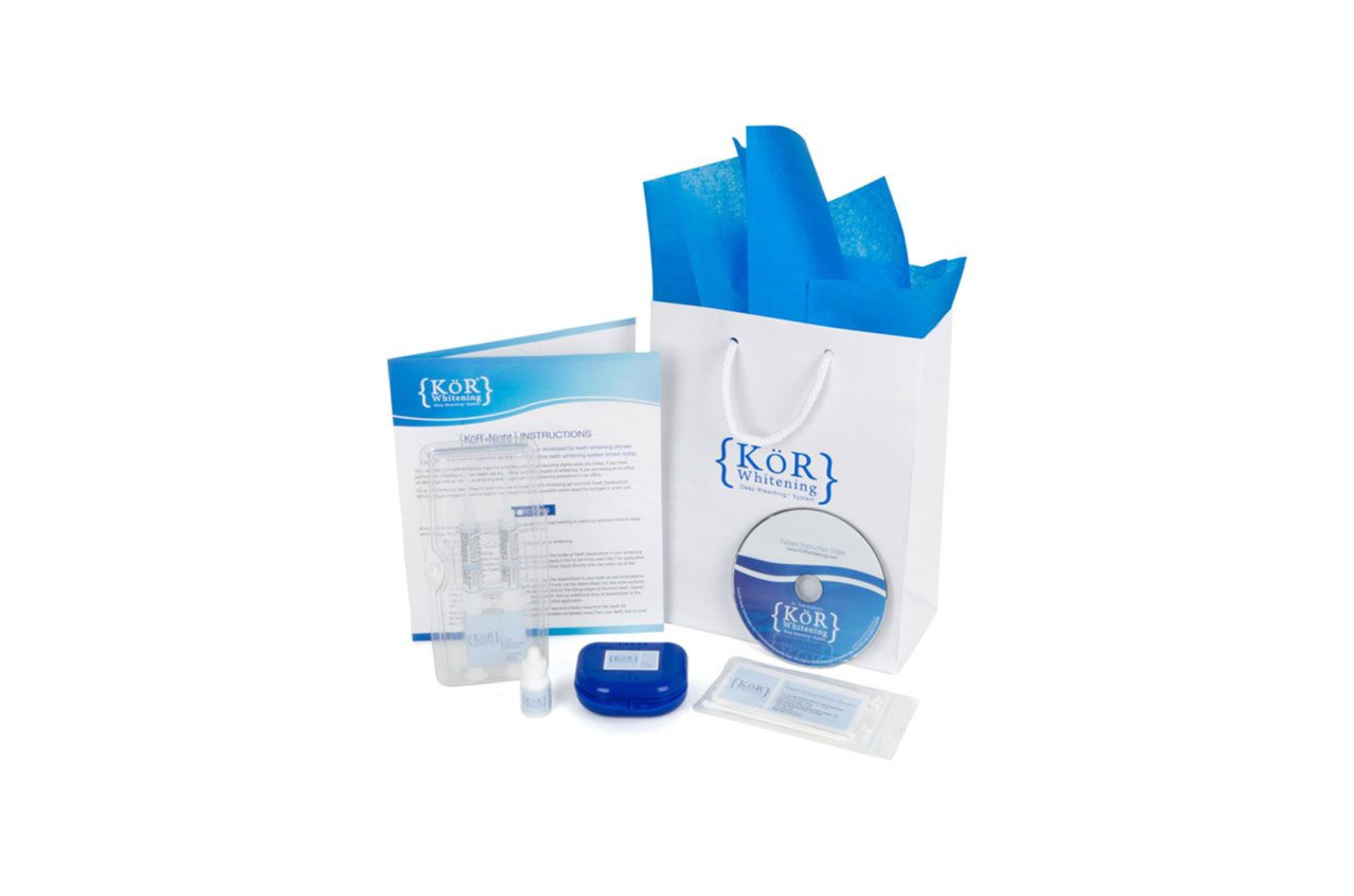
Few professional whitening systems have generated as much discussion among dental professionals as the KoR teeth whitening system. Developed over decades of whitening research,...
Reviewed by Mantas Petraitis
Pros
- Shade improvements of up to 16 shades or more, consistently outperforming most competitors
- Dedicated Ultra-T protocol for tetracycline and dentinogenesis imperfecta, cases previously considered impossible to bleach
- Reduced sensitivity due to refrigerated, stabilizer-free gels and KoR Complete desensitizer
- No lights or lasers needed, eliminating equipment costs and Substance P-mediated pulpal pain
- Custom lab-fabricated KoR-Seal trays extending effective whitening time to 6 to 10 hours
- Permanent results with periodic at-home maintenance
- Tiered kit system for precise case-matching
- Dedicated senior account manager clinical support from the manufacturer
- Strong practice revenue potential driven by high patient satisfaction and referral generation
Cons
- Higher kit cost to the practice and higher patient fees ($500 to $1,500+) compared to alternatives
- Extended treatment timelines of two to eight weeks requiring sustained patient compliance
- Sensitivity not fully eliminated in all patients, with rare cases of severe in-office discomfort
- Mandatory external lab fabrication for trays, adding a workflow step and short delay
- Tetracycline results are variable, and complete stain removal is not guaranteed
- Existing restorations (crowns, veneers, composites) do not whiten, potentially requiring replacement
- Ongoing maintenance commitment required from patients for long-term result preservation
- Cold-chain logistics for gel ordering, shipping, and storage add operational considerations
Few professional whitening systems have generated as much discussion among dental professionals as the KoR teeth whitening system. Developed over decades of whitening research, KoR positions itself as the most effective solution for everything from routine extrinsic staining to severe tetracycline discoloration. The system’s cold-chain gel storage, proprietary tray design, and chemical-only activation approach set it apart from competitors that rely on LED or laser energy.
This review takes a close look at how KoR professional teeth whitening performs in real clinical settings, what dental professionals should know before recommending it, and whether the system justifies its premium price point. The evaluation draws on manufacturer specifications, published clinical evidence from the American Dental Association, peer-reviewed research in the Journal of Evidence Based Dental Practice, and documented practitioner and patient experiences.
What Is KoR Teeth Whitening?
KoR whitening is a professional-grade teeth whitening system created by Dr. Rod Kurthy, a cosmetic dentist who spent decades studying the chemistry of dental bleaching. The system is available exclusively through dental professionals and combines at-home tray-based whitening with optional in-office treatment sessions, depending on the kit selected.
Unlike most whitening brands, KoR does not use lights, lasers, or any form of energy-based activation during treatment. Instead, the system relies on a proprietary Dual-Activated, Tri-Barrel Hydremide Peroxide gel that is mixed at the point of application. The three-barrel design keeps the active ingredients separated until use, delivering maximum potency without the compromises that come from pre-mixed formulations.
A key innovation that defines the KoR teeth whitening system is the continuous refrigeration of its whitening gels. The KoR teeth whitening gel is stored in cold-chain conditions from manufacturing through delivery to the dental office. This cold storage preserves the gel’s chemical integrity and eliminates the need for aggressive stabilizers, compounds that are widely recognized as significant contributors to bleaching-related sensitivity.
How Does KoR Teeth Whitening Gel Work?
Understanding the science behind KoR whitening gel helps dental professionals explain the process to patients and set realistic expectations for outcomes.
The Oxygenation Process
KoR whitening works through a deep oxygenation process that restores the tooth’s ability to absorb oxygen. When the gel is applied, it breaks down into reactive oxygen species that penetrate deeply into the enamel and dentin microstructure. These oxygen molecules target long-chain pigment molecules and stain chromophores trapped within the tooth, breaking apart the molecular bonds responsible for visible discoloration.
According to a systematic review published in the National Library of Medicine, peroxide-based whitening is both safe and effective when used following manufacturer protocols. The review also confirmed that light activation does not improve bleaching outcomes with high-concentration hydrogen peroxide (25% to 35%), and that light-activated systems increase the risk of tooth sensitivity. These findings support KoR’s decision to avoid light and laser activation entirely.
KoR-Seal Whitening Trays
One of the most important components of the KoR teeth whitening kit is the KoR-Seal tray. Standard bleaching trays allow saliva to infiltrate the gel within minutes, and saliva contains peroxidase enzymes that rapidly neutralize active peroxide. This limits effective whitening time to roughly 25 to 35 minutes with conventional trays.
KoR-Seal trays are engineered to create a physical seal around the teeth that blocks saliva and sulcular fluid infiltration. The manufacturer reports that this seal extends active whitening time to 6 to 10 hours per session, a dramatic improvement over standard trays. Impressions taken at the dental office are sent to the KoR whitening dental lab, where the trays are fabricated to proprietary specifications. This lab-controlled process ensures consistency and quality that may not be achievable with in-house tray production.
KoR Teeth Whitening Kit Options: Which One Fits Your Patient?
KoR offers a tiered product lineup that allows dental professionals to match the treatment intensity to each patient’s clinical needs. Selecting the correct kit is essential for achieving optimal results, and it should be integrated into a broader dental treatment plan that accounts for the patient’s overall oral health, existing restorations, and long-term goals.
KoR Home
The entry-level option for patients with average staining. KoR night teeth whitening uses 16% carbamide peroxide in KoR-Seal trays worn during sleep for two weeks. A daytime version (KoR-Day) with 9% hydrogen peroxide is available for patients who prefer not to wear trays overnight. Both include periodic at-home maintenance.
KoR Max
The best-selling kit in the KoR lineup combines two weeks of nighttime at-home whitening with a single in-office session using 34% Dual-Activated Hydremide Peroxide gel. KoR Max teeth whitening delivers more dramatic results than the at-home-only protocol and suits patients with moderate staining who want noticeable improvement.
KoR Ultra
Designed for fluorosis, naturally very dark teeth, and resistant discoloration. The protocol includes an in-office conditioning visit, three to four weeks of nightly at-home whitening, and a final in-office session with 34% gel.
KoR Ultra-T
The most intensive protocol in the KoR system, developed specifically for KoR teeth whitening for tetracycline stains and dentinogenesis imperfecta. The KoR teeth whitening tetracycline protocol requires an in-office conditioning visit, six to eight weeks of nightly at-home whitening, and a concluding in-office whitening session.
KoR Kit Comparison at a Glance
Kit | At-home duration | In-office visits | Best for |
KoR Home | 2 weeks (night or day) | None | Average staining, budget-conscious patients |
KoR Max | 2 weeks (night) | 1 visit | Moderate staining, most common protocol |
KoR Ultra | 3–4 weeks (night) | 2 visits | Fluorosis, very dark teeth |
KoR Ultra-T | 6–8 weeks (night) | 2 visits | Tetracycline staining, dentinogenesis imperfecta |
KoR Teeth Whitening Process: Step-by-Step for Dental Professionals
The KoR teeth whitening process follows a structured clinical workflow. Adhering to the KoR teeth whitening directions precisely is essential for achieving the consistent results the system is known for.
Step 1: Consultation and Case Selection
A thorough initial consultation evaluates the patient’s dental history, current oral health, type of discoloration (extrinsic versus intrinsic), and existing restorations. Patients with tetracycline staining or fluorosis should be directed toward the Ultra or Ultra-T protocols, with a candid discussion about treatment timelines and the possibility of residual staining in severe cases.
Step 2: Impressions and Tray Fabrication
Impressions of both arches are taken and sent to the KoR whitening dental lab for custom tray fabrication. The trays are typically returned within one to two weeks. This step is a key differentiator from in-house tray systems, as the KoR-Seal design requires lab-controlled precision.
Step 3: At-Home Whitening Phase
The patient receives their custom KoR-Seal trays along with the refrigerated KoR whitening gel and KoR Complete desensitizer. For KoR teeth whitening at home, the patient applies the desensitizer to the front surfaces of the teeth before each session, loads gel into the trays, and wears them nightly during sleep. The duration varies from two weeks (KoR Home and Max) to eight weeks (Ultra-T). Nighttime application is preferred because reduced salivary flow during sleep enhances the sealing effectiveness of the trays.
Step 4: In-Office Whitening Visit
For protocols that include an in-office component (Max, Ultra, Ultra-T), the patient returns for a professional whitening session. The clinician applies 34% Dual-Activated Hydremide Peroxide gel directly to the teeth in intervals over approximately one hour. No light or laser is used. The clinician monitors patient comfort throughout and should be prepared to remove the gel early if sensitivity becomes problematic.
Step 5: KoR Teeth Whitening Maintenance
Post-treatment, KoR teeth whitening maintenance involves periodic at-home sessions using the custom trays and maintenance-strength gel. For typical cases, one overnight session per month maintains results. Tetracycline patients follow an Accelerated Maintenance protocol with more frequent sessions initially, tapering over time. With consistent maintenance, KoR results are designed to be permanent, a claim that distinguishes the system from competitors where shade regression is common within months.
KoR Teeth Whitening for Tetracycline Stains: What Dental Professionals Need to Know
Tetracycline staining represents one of the most challenging clinical scenarios in cosmetic dentistry. These deep, intrinsic stains were historically considered untreatable through bleaching alone, leaving veneers and crowns as the only aesthetic options. KoR teeth whitening for tetracycline stains has changed that calculus significantly.
Why Tetracycline Cases Are Uniquely Difficult
Tetracycline antibiotics administered during tooth development become incorporated into the dentin, forming stable molecular complexes with exceptionally strong chromophore bonds. Even when disrupted through bleaching, these bonds tend to re-form, causing color regression. Additionally, tetracycline commonly affects the secretory ameloblasts, resulting in reduced enamel thickness, particularly in cervical areas.
Clinical Pearls for the Ultra-T Protocol
The KoR Ultra-T protocol begins with an in-office conditioning visit that is not expected to produce visible results. This is followed by six to eight weeks of nightly at-home whitening. A critical point to communicate to patients: teeth may appear dramatically white within the first few days due to millions of oxygen bubbles trapped in the enamel that reflect light. This is an optical illusion. If the patient stops treatment prematurely, the bubbles dissipate within days and most perceived whitening is lost. Completing the full protocol is essential.
After the at-home phase, a final in-office whitening visit with 34% gel is performed. The patient then begins Accelerated Maintenance, which involves tapering at-home whitening sessions. Some patients with banding in cervical areas may benefit from targeted composite bonding to mask any residual darker color.
KoR Teeth Whitening Sensitivity: How the System Manages Discomfort
Sensitivity is the single most common barrier to patient satisfaction with any whitening system. KoR teeth whitening sensitivity management takes a multi-layered approach that addresses root causes rather than simply masking symptoms.
Refrigerated gels without aggressive stabilizers. Chemical stabilizers added to room-temperature gels are major sensitivity contributors. KoR’s cold-chain storage eliminates the need for these compounds.
KoR Complete desensitizer. Applied before and after each whitening session, KoR Complete physically plugs dentinal tubule orifices, preventing the fluid movement that activates pulpal nerves. This mechanism targets the Hydrodynamic Mechanism of sensitivity at its source.
No light or laser activation. Research published in PMC confirms that light-activated systems increase sensitivity risk by stimulating the pulp to release Substance P, a pain-signaling neurotransmitter. KoR avoids this entirely.
Most KoR whitening dental professionals report that their patients experience significantly less sensitivity compared to other systems. However, sensitivity is not completely eliminated in all cases. Some patients, particularly those with thin enamel or pre-existing dentin exposure, may experience mild to moderate discomfort during the at-home phase or the in-office session. Severe sensitivity, while rare, has been reported. Pre-treating at-risk patients with desensitizing toothpaste for two weeks prior to treatment is a recommended best practice.
Zoom or KoR Teeth Whitening: How Do They Compare?
The comparison of Zoom or KoR teeth whitening is one of the most common evaluations dental professionals face when selecting a whitening platform. Both systems are well-established, but they differ in philosophy, activation method, and clinical applications. For a detailed breakdown of the Zoom system, see our Philips Zoom professional whitening review.
Feature | KoR whitening | Zoom whitening |
Activation | Chemical only | LED light |
Gel storage | Continuously refrigerated | Room temperature |
At-home component | Integral (2–8 weeks) | Optional |
Tetracycline protocol | Dedicated Ultra-T system | Limited effectiveness |
Sensitivity | Generally lower | Often higher |
Shade improvement | Up to 16+ shades | Up to 8 shades |
Patient cost | $500–$1,500 | $300–$700 |
Result longevity | Permanent with maintenance | 3–5 years, regression common |
For practices that primarily treat mild extrinsic staining and prioritize single-visit convenience, Zoom remains a solid option. For practices that see a broader range of discoloration, including fluorosis and tetracycline cases, KoR offers a depth of clinical versatility that Zoom cannot match.
KoR Teeth Whitening Cost Without Insurance
The KoR teeth whitening cost without insurance depends on the kit selected, the geographic location of the practice, and whether additional in-office sessions are needed.
KoR Home: $500 to $1,000
KoR Max: $800 to $1,200
KoR Ultra: $1,000 to $1,500
KoR Ultra-T: $1,200 to $1,500+
Dental insurance plans classify teeth whitening as a cosmetic procedure and do not typically provide coverage. The American Dental Association maintains the CDT coding system used for billing, and the KoR whitening dental code designations are D9972 (in-office external bleaching per arch), D9973 (external bleaching per tooth), and D9975 (external bleaching for home application per arch, including materials and custom tray fabrication). Patients may offset out-of-pocket costs through HSA or FSA accounts, and many dental practices offer financing options. For broader guidance on dental insurance coverage for cosmetic procedures, the best dental insurance companies guide provides a helpful resource.
KoR Teeth Whitening Reviews: What Practitioners and Patients Report
KoR teeth whitening reviews from dental professionals are overwhelmingly positive. Practitioners frequently highlight the system’s consistency, the ability to successfully treat cases that other systems failed on, and the reduction in sensitivity complaints compared to previous whitening platforms.
Patient reviews on platforms like RealSelf reflect a mixed but largely favorable picture. Many patients describe significant shade improvements and express satisfaction with the comfort of the KoR-Seal trays. Patients with severe tetracycline staining have described results as transformative.
KoR Teeth Whitening Reviews Complaints
The most common KoR teeth whitening reviews complaints center on a few recurring themes. Some patients report sensitivity during the in-office 34% gel application, particularly during the second and third intervals. Others find the multi-week at-home commitment inconvenient, especially for the Ultra-T protocol that requires six to eight weeks of nightly tray wear. A subset of tetracycline patients has reported that results faded faster than expected when maintenance protocols were not followed consistently. These complaints highlight the critical importance of patient education, realistic expectation-setting, and strict adherence to the prescribed maintenance schedule.
KoR Whitening vs. Korean Teeth Whitening Gel: A Quick Clarification
Search queries for "korean teeth whitening gel" frequently return results about the KoR whitening system, creating potential confusion. KoR Whitening is an American-developed system created by Dr. Rod Kurthy. The brand name is unrelated to Korean dental products. Dental professionals and patients searching for KoR teeth whitening should verify they are evaluating the correct product line and its associated clinical evidence, not unrelated consumer products from Korea.
KoR Teeth Whitening Video Resources for Training
Dental professionals evaluating the system can access KoR teeth whitening video content directly from the manufacturer’s website. These videos include clinical workflow demonstrations, patient before-and-after results, and educational presentations from Dr. Rod Kurthy. KoR also assigns each practice a dedicated senior account manager who provides personalized clinical support, case consultation, and troubleshooting. This level of manufacturer backing is cited frequently by KoR whitening dental professionals as a meaningful practice advantage.
Bottom Line
KoR teeth whitening is one of the most effective professional whitening systems available to dental professionals today. The combination of refrigerated gel technology, precision-engineered trays, and a structured clinical protocol delivers results that are difficult to match, particularly for intrinsic stains and tetracycline cases. The system commands a premium price, and the multi-week at-home commitment demands strong patient communication. However, for practices that want a whitening platform they can recommend with confidence across the widest range of clinical scenarios, KoR professional teeth whitening represents a sound investment.
Verdict
<p>The KoR professional teeth whitening system earns a strong recommendation for dental professionals seeking a whitening platform that delivers consistent, dramatic results across a wide range of case types. The science behind the continuously refrigerated KoR teeth whitening gel, combined with the engineered seal of the KoR-Seal trays, translates into measurably better clinical outcomes than the majority of competing systems.</p><p>The tiered kit structure provides genuine clinical flexibility, from straightforward at-home whitening for average cases to the Ultra-T protocol that tackles tetracycline staining without invasive restorative intervention. Sensitivity management is notably improved over light-activated alternatives, though not eliminated entirely. The primary trade-offs are a higher cost to the practice and patient, reliance on external lab fabrication for trays, and the reality that tetracycline outcomes, while significantly better than any competitor, remain variable and demand ongoing patient commitment to maintenance. For practices that want a reliable, science-driven whitening system that builds patient trust through results, KoR whitening for teeth is a top-tier choice.</p>
Frequently Asked Questions
How does KoR whitening differ from other professional whitening systems?
KoR differentiates itself through continuously refrigerated gels that maintain full potency without chemical stabilizers, proprietary KoR-Seal trays that block saliva infiltration for 6 to 10 hours of active whitening per session, and a chemical-only activation approach that eliminates the sensitivity risks associated with lights and lasers. The tiered kit system also allows dental professionals to match the protocol to the specific type and severity of staining.
Is KoR teeth whitening effective for tetracycline-stained teeth?
The KoR Ultra-T kit is specifically designed for tetracycline and dentinogenesis imperfecta cases. The protocol involves an in-office conditioning visit, six to eight weeks of nightly at-home whitening, and a final in-office session. While KoR achieves significantly greater improvement on tetracycline cases than any other commercially available whitening system, complete stain elimination is not always possible, and ongoing maintenance is essential to prevent chromophore bond re-formation.
What CDT dental code should be used for KoR whitening?
The relevant CDT codes are D9972 for in-office external bleaching per arch, D9973 for external bleaching per tooth, and D9975 for external bleaching for home application per arch (including materials and custom tray fabrication). Most dental insurance classifies whitening as cosmetic and does not cover these procedures, but claims should still be submitted for record-keeping and transparency.
How much does KoR whitening cost without insurance?
Patient costs typically range from $500 to $1,000 for the KoR Home system and $1,000 to $1,500+ for combined in-office and at-home protocols. Pricing varies by region, and patients may use HSA or FSA funds to offset costs.
Does KoR whitening cause tooth sensitivity?
KoR is formulated to minimize sensitivity through refrigerated, stabilizer-free gels and the KoR Complete desensitizer that physically plugs dentinal tubules. Most practitioners report significantly reduced sensitivity compared to other systems. However, some patients still experience mild to moderate discomfort, and rare cases of severe in-office sensitivity have been documented.
How long do KoR whitening results last?
With periodic at-home maintenance using custom trays and maintenance-strength gel, KoR results are designed to be permanent. Typical cases may need one overnight maintenance session per month. Tetracycline patients require more frequent sessions initially, tapering over time.
Can patients use KoR trays during the day instead of at night?
KoR offers a daytime protocol (KoR-Day) using 9% hydrogen peroxide with shorter wear times of one to two hours, repeated once or twice daily. Nighttime whitening is generally more effective due to reduced salivary flow during sleep, but the daytime option is a practical alternative for patients who cannot tolerate overnight tray wear.
Are there contraindications for KoR teeth whitening?
Contraindications include pregnancy, breastfeeding, severe enamel erosion, untreated active caries, and extreme dentin hypersensitivity. Patients with extensive anterior restorations should be counseled that crowns, veneers, and composite fillings will not whiten, and visible restorations may need replacement after whitening for uniform color.
What makes KoR a good investment for a dental practice?
KoR delivers consistently excellent results that drive high patient satisfaction, strong word-of-mouth referrals, and premium positioning for cosmetic services. The ability to treat challenging cases like tetracycline staining differentiates a practice in competitive markets. Manufacturer clinical support and training resources reduce the learning curve for adoption.
Is KoR the same as korean teeth whitening gel?
No. KoR Whitening is an American-developed professional whitening system created by Dr. Rod Kurthy. The brand name is unrelated to Korean dental products. The similarity in spelling sometimes causes confusion in online searches, but these are entirely separate product categories.