From Church Halls to Conference Stages: Adewoye Daniel Goodness
Fresh out of dental school and already reshaping the conversation around oral healthcare in Africa, Adewoye Daniel Goodness talks about discipline, service, and why the future of...
Written by Marcus Hale
Read time: 5 min read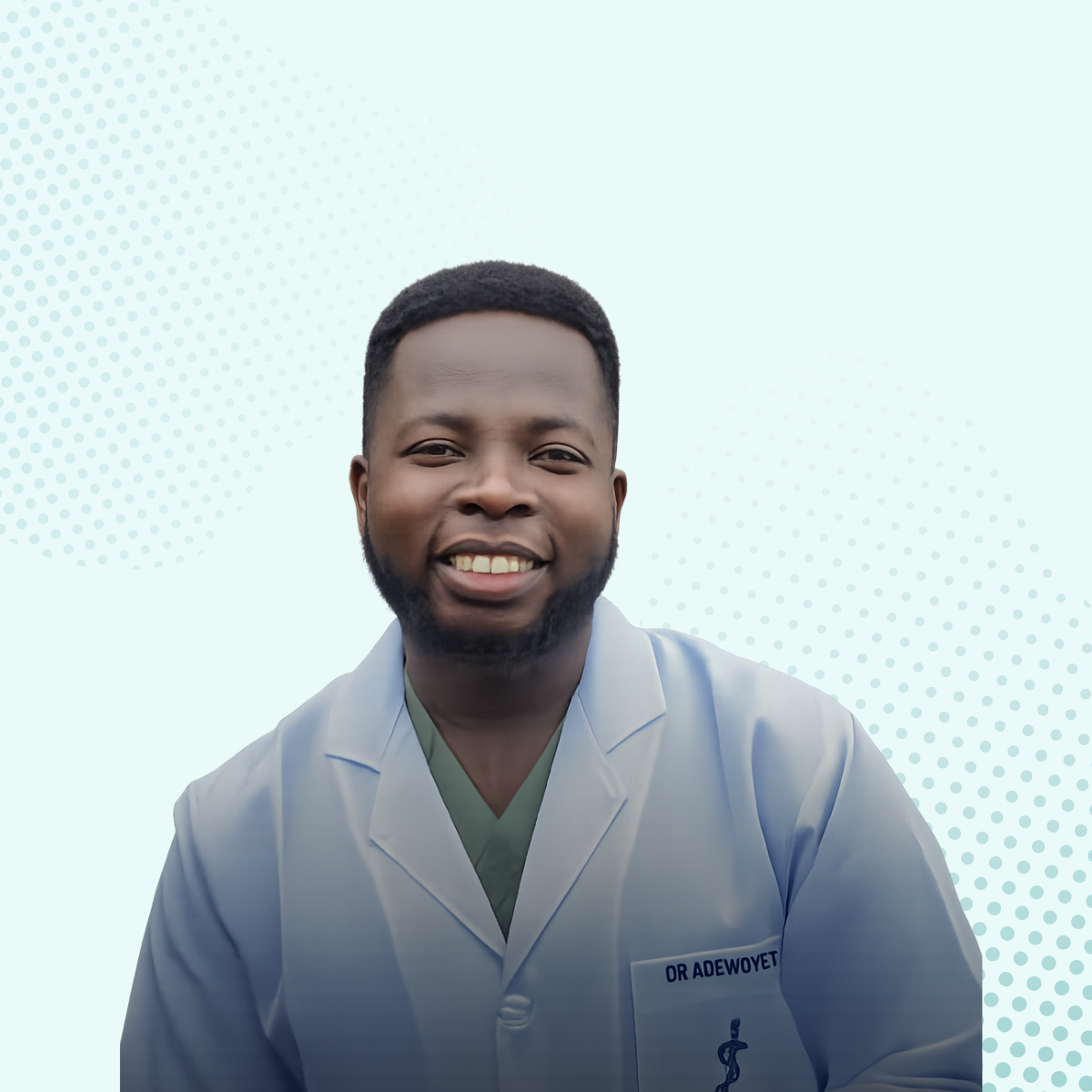
Fresh out of dental school and already reshaping the conversation around oral healthcare in Africa, Adewoye Daniel Goodness talks about discipline, service, and why the future of dentistry depends on prevention over extraction. From church-hall outreaches to a keynote stage in Barcelona, he shares what's driving his mission and why staying human matters most in an increasingly automated profession.
About Adewoye Daniel Goodness
Adewoye Daniel Goodness is a Dental Surgery graduate from the University of Medical Sciences (UNIMED), Ondo State, Nigeria, where he built a reputation as a clinician, researcher, and advocate long before completing his degree. His undergraduate thesis on the oral health needs of epilepsy patients reflected an early focus on research that serves real communities. At the same time, his implantology training under Professor Ogunsalu and a seminar he organized with Dr. Ovoh Onoriobe pushed his clinical grounding beyond the standard curriculum. He carried that vision onto the global stage as a Keynote Speaker at the 3rd European Conference on Dentistry and Oral Health in Barcelona in May 2026, presenting on personalized, preventive oral healthcare.
Goodness's impact extends deep into the community, from free dental screenings and education sessions across faith groups, campuses, and underserved populations in Ondo State to his work with the Oral Health Africa Initiative across multiple African nations. A former Vice President of the Redeemed Christian Fellowship at UNIMED and student leader in both social and sports affairs, he brings a people-first approach and communication fluency, honed through years of public speaking and MC work, directly into the dental chair. He is currently awaiting licensure through the Medical and Dental Council of Nigeria. He is building a digital platform for oral health education across Africa, guided by one conviction: prevention is always better than extraction, in dentistry and in life.
In this conversation, Goodness reflects on the moments that shaped his path, the barriers keeping oral healthcare out of reach for millions, and what he believes his generation of dentists must master to stay irreplaceable.
You've previously said discipline and service are at the heart of why you went into dentistry. As you start your career, what kind of impact do you most want to have, and what's driving that?
Discipline brought me to dentistry. But it was the service that made me stay.
There is a moment I return to often. I was conducting an oral health outreach at the Redeemed Christian Church of God in Ondo State, setting up a dental station in a church hall – when a middle-aged woman sat down in front of me and opened her mouth. She had been living with pain for over two years. Not because she did not care about her health. But because nobody had ever shown up in her world with the tools and the time to help her.
That moment crystallized everything.
The impact I most want to have is not measured in the number of teeth I restore. It is measured in the number of communities that finally understand that their oral health matters and that someone is coming to meet them where they are.
Specifically, I want to build a career at the intersection of clinical excellence and community advocacy. I want to be the kind of dentist who treats patients in the morning and trains community health volunteers in the afternoon. Who uses digital platforms to make oral health education impossible to ignore? Who conducts research that actually changes policy rather than sitting in academic journals no one reads?
What drives that? Honestly, it is the gap.
Nigeria has approximately one dentist for every 50,000 people. The WHO recommends one for every 7,500. And I am entering this profession at a moment when young dentists have more tools than ever to close it – clinical, technological, and communicative.
I did not choose dentistry to fill a vacancy. I chose it because I believe the version of African healthcare we deserve is possible – and that building it will require people who see service not as a supplement to their career but as the very foundation of it.
You frame oral health as a right, not a luxury. What are the most overlooked barriers to access, and which approaches actually reach the communities that need them?
When people talk about barriers to oral health access in Africa, the conversation almost always starts and ends with cost. And while affordability is real and urgent, it is not the whole story. Some of the most damaging barriers are the ones we rarely name out loud.
The first is the cultural normalization of dental disease. Across many Nigerian and African communities, tooth loss is treated as an inevitable consequence of aging rather than a preventable outcome. When suffering becomes normalized, people stop seeking help not because they cannot access it, but because they have stopped believing they deserve it.
The second is the clinic-centric model of care. We have built a healthcare system that expects sick people to come to us. But the communities that need oral healthcare most are the ones least likely to walk through a clinic door, either because of geography, cost, time, or the deeply entrenched belief that the dentist is someone you see only when the pain becomes unbearable. Taking care of communities rather than waiting for communities to come to care is not a supplementary strategy. It is the primary one.
The third and perhaps most overlooked is the absence of trusted messengers. Health information delivered by a stranger in a white coat lands differently than the same information delivered by someone who looks like you, prays where you pray, or teaches your children. Community health volunteers, religious leaders, teachers, and market women have extraordinary reach into the spaces where formal healthcare cannot go. Training them as oral health champions, as organizations like the Oral Health Africa Initiative are doing, is one of the most high-leverage interventions available to us.
The approaches that actually work share three characteristics: they go to where people already are, they speak in a language people already understand, and they build trust before they build behavior change. Mobile screening units. Faith-based outreaches. School dental programs. Volunteer capacity training. These are not glamorous interventions. But they are the ones who actually reach the last mile.
The future of oral health in Africa will not be built in referral hospitals. It will be built in church halls, university campuses, and community centers by professionals who understand that the greatest clinical skill is not always what you do with a drill. Sometimes it is knowing how to show up where you are needed most.
You're focused on preventive dentistry and community screening. What needs to change in clinics, training, or daily habits for the field to move from treatment-first to prevention-first?
The uncomfortable truth about dentistry, and I say this with deep respect for the profession I have just entered, is that we have built an entire economic model around disease.
Most dental clinics are financially structured to reward intervention. The more teeth we fill, extract, and restore, the more revenue is generated. Prevention, by contrast, is not particularly profitable in the short term. A patient who brushes correctly, flosses daily, and attends regular check-ups generates far less revenue than one who arrives with seven untreated cavities and advanced gum disease.
This is not an indictment of dentists. It is a structural problem. And solving it requires changes at three levels simultaneously.
At the clinical level, the shift requires reorienting the patient relationship from reactive to proactive. Every clinical encounter should include a prevention conversation, not a cursory "brush twice a day" but a genuine, personalized discussion about the specific risks this patient carries and the specific changes that would address them. Screening should be as central to the appointment as the chief complaint.
At the training level, dental curricula must invest as heavily in communication, behavior change theory, and public health as they do in technical procedures. A dentist who can perform a flawless root canal but cannot motivate a patient to change a damaging habit has only solved half the problem. We need clinicians who are also educators fluent in the language of behavior change, not just the language of pathology.
At the community level, prevention must happen before disease begins, which means it must happen outside the clinic entirely. Regular community screenings, school dental programs, and mass oral health education campaigns are not charity work. They are infrastructure. They are the upstream interventions that reduce the downstream burden on an already overstretched system.
The shift from treatment-first to prevention-first is ultimately a shift in how we measure success. When we begin celebrating the patients who never needed treatment as much as we celebrate the complex cases we resolved, that is when we will know the culture has truly changed.
I entered this profession determined to practice both sides of that equation. The drill and the conversation. The clinic and the community. The cure and the prevention.
Both matter. And we need dentists who refuse to choose between them.
You believe effective communication amplifies impact, and you have a background in public speaking and MC work. How does that translate to the chair, to getting patients to actually act on the advice they're given?
Most dental advice fails not because it is wrong but because it is delivered in a way that makes people feel judged rather than empowered.
I learned this long before I learned it in a textbook.
Years of public speaking, MCing events, and leading community outreaches taught me something that dental school reinforced clinically: the most technically accurate message, delivered without emotional intelligence, will not change a single behavior. People do not act on information. They act on how that information makes them feel.
At the chair, this translates into three deliberate practices.
The first is listening before speaking. When a patient sits down, the most important thing I can do in the first two minutes is not examine their mouth – it is to understand their life. What do they fear? What do they value? What has stopped them from coming in sooner? The answers to those questions determine everything about how I communicate the clinical findings that follow.
The second is translating, not just informing. There is a significant difference between telling a patient they have Stage II periodontitis and telling them that the bone supporting their teeth is quietly dissolving and that, without intervention, they will begin losing teeth within years. One is clinical language. The other is a conversation that lands. I have learned, from speaking to audiences of students, faith communities, and healthcare professionals, that I impact lives in the specific, not the technical. The best communicators make the abstract tangible and the clinical human.
The third is closing with agency, not instruction. Patients who leave a consultation feeling told what to do are far less likely to comply than patients who leave feeling they have made a decision. The goal is not compliance. It is ownership. When a patient understands why something matters in the context of their own life, their confidence, their ability to eat without pain, their children watching their habits, they act. Not because a dentist told them to. But because they chose to.
Communication is not a soft skill. In dentistry, it is a clinical intervention. And I intend to treat it as one.
As a new graduate entering a field shaped by AI diagnostics, teledentistry, and minimally invasive techniques, which of these do you think your generation will be expected to master that the last one wasn't?
Every generation of dentists inherits a profession and then reshapes it. My generation is inheriting a field mid-transformation – and I think the competency we will be expected to master above all others is not a clinical technique or a digital tool.
It is the ability to remain irreplaceably human in an increasingly automated profession.
Let me explain what I mean.
AI diagnostics are already outperforming human clinicians in the detection of early caries, periapical pathology, and bone loss on radiographs. Teledentistry is dismantling the assumption that care requires physical proximity. Minimally invasive techniques are reducing the invasiveness and the fear of dental intervention. These are not distant possibilities. They are present realities that are reshaping the profession faster than most curricula have adapted.
My generation will be expected to work fluently alongside these tools. We will need to understand how AI diagnostic systems reach their conclusions – not to replicate them manually, but to interrogate them intelligently. We will need to build teledentistry workflows that extend our reach without compromising the quality of care. We will need to master minimally invasive protocols as the new standard, not the advanced elective.
But here is what I believe more deeply:
The last generation was trained to do what technology could not. My generation must master what technology will never do.
Technology can detect a lesion. It cannot hold a frightened patient's hand. It can generate a treatment plan. It cannot understand why a patient has avoided the dentist for eleven years and tailors every interaction accordingly. It can analyze a radiograph with extraordinary precision. It cannot look a patient in the eye and make them feel that their health and their dignity matter.
The dentists my generation will be measured against are not the ones from twenty years ago. They are the AI systems, the automated workflows, and the digital interfaces that will handle an increasing share of what used to require our hands and eyes.
To remain essential in that landscape, we must become exceptional at the things that require a human presence, empathy, judgment, communication, and the kind of clinical wisdom that comes not from an algorithm but from genuinely caring about the person in the chair.
I did not enter this profession to compete with technology. I entered it because I believe that at the center of every clinical encounter is a human being who deserves another human being – fully present, technically excellent, and genuinely invested in their wellbeing.
That is what my generation must master. And that is the dentist I am committed to becoming.
Want to Be Featured?
Adewoye Daniel Goodness is one of many dental professionals shaping the future of the industry, and Dental Reviewed wants to hear from more voices like his. Whether you're a recent graduate with a bold perspective, a clinician driving change in your community, or a specialist with insights the industry needs to hear, we'd love to feature your story.
If you're interested in being interviewed or contributing as an industry voice, get in touch with Ben at ben@dentalreviewed.com. We're always looking to spotlight the people pushing dentistry forward, one conversation at a time.